Your managers are avoiding the conversation.
Not because they do not care. Because nobody ever taught them how, and the stakes feel high enough that putting it off starts to feel like a strategy.
This is the guide you hand them. One conversation structure, one prep checklist, and clear language for the moments managers freeze.
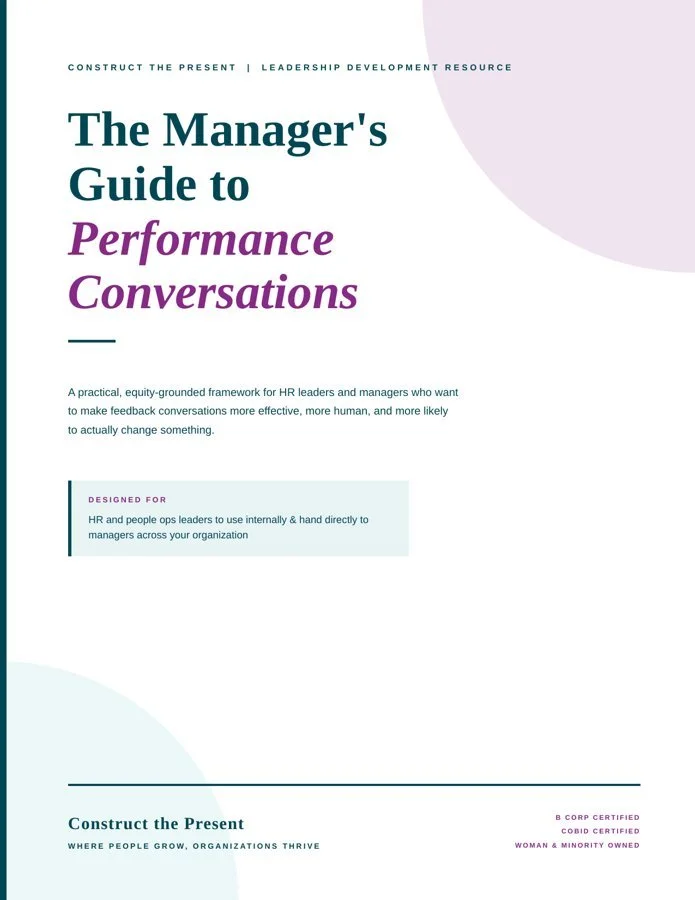
What’s inside
Six pages a manager can use tomorrow.
No theory chapter. No reading assignment. A manager can open this an hour before a hard conversation and walk in ready.
01
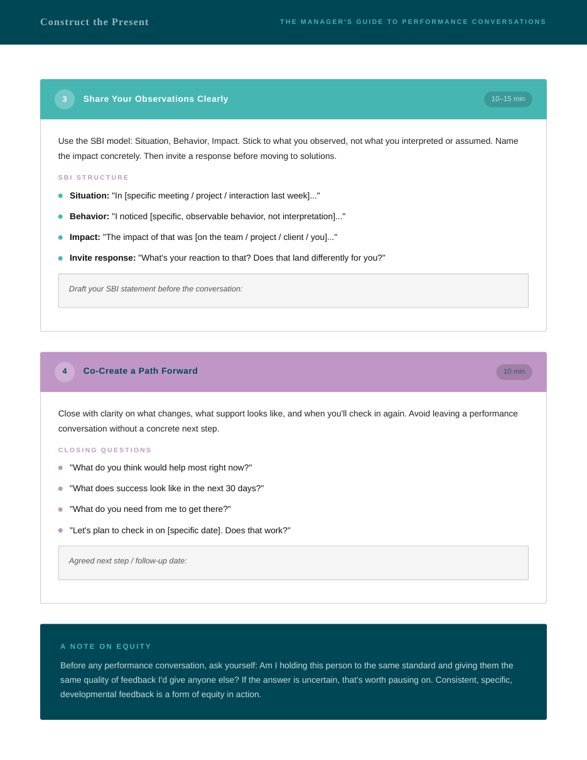
The SBI structure
Situation, behavior, impact, then invite a response. It keeps feedback tied to what actually happened instead of what someone decided it meant.
02
A four-phase conversation map
With timing for each phase and the exact questions to ask, including how to close so the conversation ends with a next step instead of a vague agreement.
03
Do this, avoid that
The specific habits that make feedback land, next to the ones that quietly shut people down. Managers usually recognize themselves in at least one.
04
A prep checklist
Six questions to answer before the conversation. If a manager cannot answer them, they are not ready yet, and the checklist tells them that plainly.
Vague feedback is not kindness. It is avoidance.
Softening a message until nobody can act on it feels generous in the moment and costs someone their development.
That cost is not evenly distributed. The people who most often receive vague, non-actionable feedback are the same people who then get passed over for the stretch assignment, because nobody ever told them clearly what to work on.
So the guide teaches specificity as a skill, and it asks managers one question before every conversation: would I say this, this way, to anyone else on my team?


Built for HR and People leaders with a manager layer to support.
-
You have managers who were promoted for being excellent at the job, and never trained to lead people.
-
Performance issues in your org tend to surface late, usually at review time, usually as a surprise.
-
You want something you can send out today without building a curriculum first.
-
You would rather your managers handle the hard conversation than route it to you.
-
Equity becomes embedded in daily operations, not treated separately.

Send it to your managers this week.
It is free, it is six pages, and it is built to be forwarded. No login, no course, no calendar invite required.